Deep Learning Development Company
We build custom deep learning systems — convolutional networks for computer vision, Transformer-based NLP models, LSTM networks for time series and anomaly detection, and GANs for generative AI. Production-ready, rigorously evaluated, deployable to cloud or edge. Built on PyTorch and TensorFlow by engineers who understand both the mathematics and the engineering.
Trusted by product teams, startups & agencies across 35+ countries








Why iCoderz is the Right Fit for Your Deep Learning Project
Looking for a Deep Learning development company that delivers smarter applications, scalable AI models, and enterprise-grade results? At iCoderz, we help startups and enterprises build advanced machine learning systems that mimic human-like decision-making using cutting-edge neural network architectures.
As a premier AI and deep learning-based company, we move beyond the boundaries of conventional machine learning paths; the trend always leads the way. We are developing neural-based models for dynamism and real-time predictions, computer vision, NLP, and beyond. Our AI engineers and data scientists create tailor-made solutions for your industry and business goals. Our models achieve up to 95% accuracy in tasks like image recognition.
Ready to turn your data into powerful insights?
Deep Learning Capabilities
Every neural network architecture your use case demands — from CNNs and Vision Transformers to LSTMs and diffusion models.
Deep Learning Development Cost & Timeline
Transparent estimates for common deep learning engagements. Data availability is the primary timeline variable.
| Engagement Type | What’s Included | Timeline | Estimated Cost |
|---|---|---|---|
| Image Classifier (Transfer Learning) | Fine-tuning + evaluation + REST API + monitoring | 4–8 weeks | $15K – $28K |
| Object Detection System | YOLO/ViT + labelling + training + production API | 8–14 weeks | $25K – $55K |
| NLP / Text Classification Model | BERT fine-tuning + NER/classification + API | 6–12 weeks | $18K – $40K |
| Edge-Deployed Vision System | Model + optimisation + edge hardware + dashboard | 12–20 weeks | $40K – $85K |
| End-to-End Deep Learning Platform | Data pipeline + training + serving + MLOps + monitoring | 18–28 weeks | $70K – $150K+ |
* Estimates are indicative. Data labelling requirements are the primary cost and timeline variable. All projects scoped after a free discovery call.
Our Deep Learning Development Process
From data audit and architecture selection to production deployment — with rigorous evaluation at every stage.
Deep Learning Engineering Practices That Deliver Results
The practices that distinguish deep learning systems that perform reliably in production from research experiments that never ship.
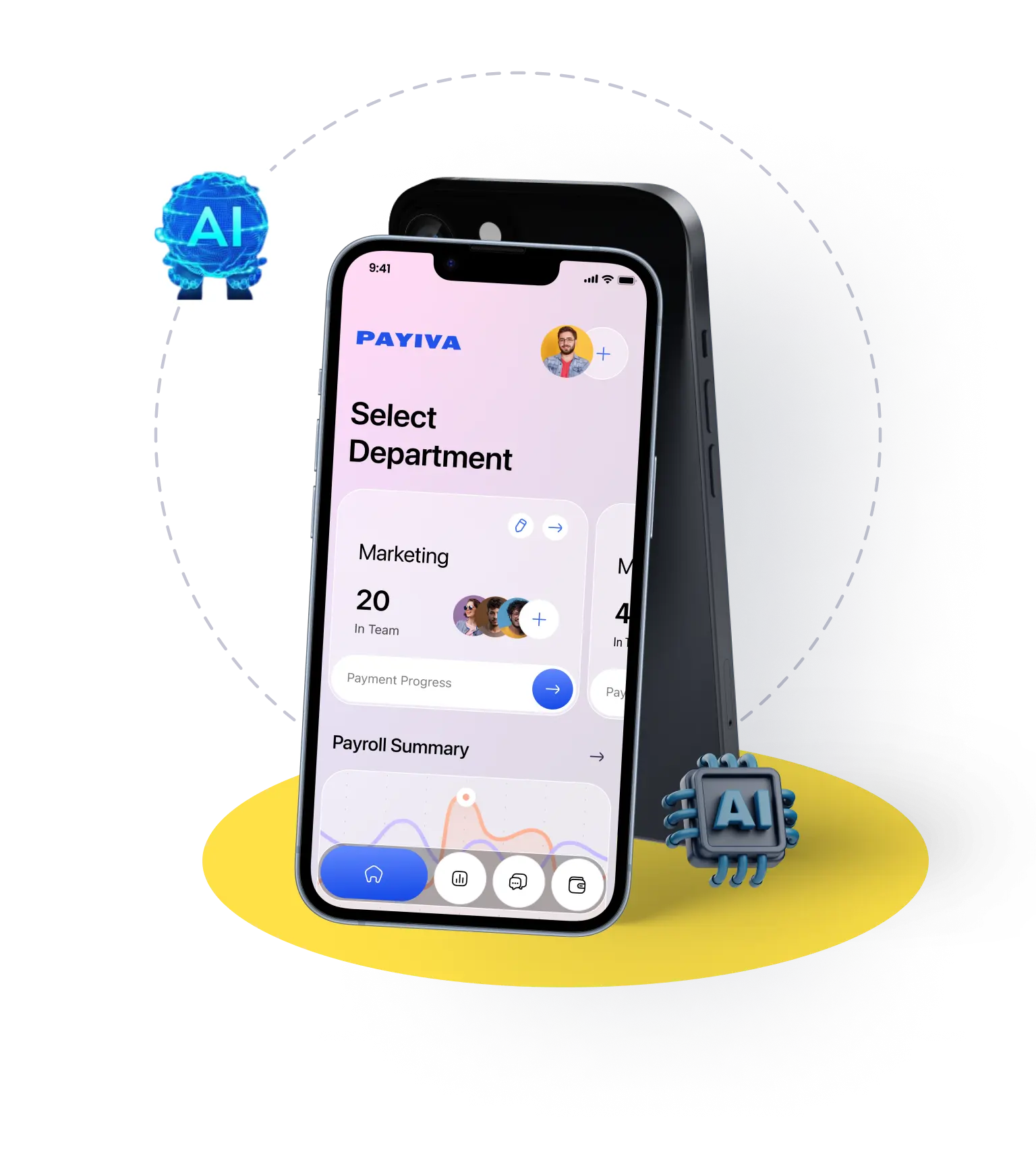
Apps We've Built That Made a Difference
Explore our full portfolio of mobile apps that have driven real results for our clients — from first launch to millions of downloads.
 iOS App
The Chowman App
The Chowman App opens the gateway for the world of flavorful Chinese cuisine for customers directly from the famous Kolkata-based Chinese restaurant chains.
 iOS App
Square Fit
A fantastic mobile app that helps you make beautiful photo & video edits on a single app. Square Fit includes 50+ tools to edit, add effects, and optimize images and videos.
Experience in Every Sector
14+ years of building production-grade software across the most demanding industries.
Our Deep Learning Technology Stack
From architecture implementation and distributed training to production serving and edge optimisation.
Frameworks
Computer Vision
Training Infrastructure
Experiment Tracking & MLOps
Edge & Optimisation
Serving & Production
Why Teams Choose iCoderz for Deep Learning
10+ years of neural network engineering, transfer learning expertise that minimises your data requirements, and the experience to deploy models on cloud and constrained edge hardware alike.
Transfer Learning Expertise
We achieve production-quality results with dramatically less labelled data by leveraging pre-trained foundation models. This reduces your annotation cost, shortens training time, and often delivers better accuracy than training from scratch with the same dataset — because pre-trained features from ImageNet or web-scale text genuinely transfer to most business domains.
Cloud and Edge, Both
Many deep learning vendors can deploy to cloud but struggle with edge. We have production experience deploying optimised models on NVIDIA Jetson, iOS (Core ML), Android (TFLite), and custom embedded hardware — meeting real-time latency requirements for manufacturing, retail, and autonomous systems that can’t rely on cloud connectivity.
Reproducible, Documented Science
Every training run is logged and reproducible. You receive a full handover package including model weights, training scripts, data pipelines, evaluation reports, and architecture documentation — not just a model file and hope. Your team can retrain, fine-tune, and extend independently after handover.
100% Code & IP Ownership
You own 100% of the trained model weights, training code, data pipelines, and evaluation scripts at handover. NDA signed before any project discussion. No proprietary training platform lock-in — everything runs on standard open-source infrastructure you control.
Deep Learning Development Questions Answered
Can’t find your answer? Contact us — we reply within 4 business hours.
Deep learning projects at iCoderz range from $15,000 for a focused model (e.g. an image classifier via transfer learning) to $100,000+ for end-to-end systems with data labelling, custom training infrastructure, and production deployment. A computer vision quality inspection system typically costs $25K–$60K. We provide a detailed estimate after a free discovery call.
With transfer learning from a pre-trained foundation model, we can achieve strong results with as few as 500–2,000 labelled images for classification. Training from scratch typically requires tens of thousands to millions of examples. We advise on minimum dataset sizes, help design labelling workflows, and apply data augmentation to maximise performance from limited data.
Deep learning excels at unstructured data — images, video, audio, and raw text where manual feature engineering is impractical. Classical ML (gradient boosting) often outperforms deep learning on structured tabular data with moderate dataset sizes. We recommend deep learning specifically for computer vision, speech, and complex sequential modelling — and classical ML for most structured business prediction problems.
A focused deep learning model with available labelled data takes 6–12 weeks including training, evaluation, and production API deployment. A full system with labelling pipeline, custom training infrastructure, and edge deployment takes 14–24 weeks. The biggest variable is data readiness — projects requiring large-scale labelling add 4–8 weeks before model development begins.
Yes. We optimise models for edge and mobile deployment using quantisation (INT8/FP16), pruning, knowledge distillation, and ONNX export. Targets include iOS (Core ML), Android (TFLite), NVIDIA Jetson, and Raspberry Pi. We benchmark latency, memory, and accuracy trade-offs at each optimisation level to meet your real-time inference requirements.
Yes — manufacturing quality control and visual inspection is one of our most common deep learning use cases. We build defect detection, surface inspection, and assembly verification systems using CNNs and Vision Transformers that run on standard industrial cameras connected to edge devices (NVIDIA Jetson) at the production line.
PyTorch is our primary framework for research and production, with TensorFlow/Keras used for projects requiring TFLite edge deployment. We use Hugging Face Transformers for NLP, the timm model zoo for computer vision architectures, and ONNX for cross-framework model export and TensorRT for GPU inference optimisation.
Build Neural Networks That
Work in Production, Not Just Papers
Tell us your perception or prediction problem. We’ll assess your data, recommend the right architecture, and give you a transparent estimate within 5 business days.
Describe your problem → response within 24 hours
Data audit + discovery call with a senior ML engineer
Architecture proposal with milestone-based pricing
No obligation. NDA available. Free data assessment.