Machine Learning Development Company
We build custom machine learning models and end-to-end ML pipelines — from data engineering and feature design to model training, production deployment, and continuous monitoring. Predictive analytics, classification, recommendation systems, NLP, and fraud detection. Built on your data. Monitored in production.
Trusted by product teams, startups & agencies across 35+ countries








Future-Ready Machine Learning Solutions for Modern Enterprises
Machine learning is a key area of artificial intelligence that enables systems to learn from data and steadily improve over time without being explicitly programmed. Therefore, the automation of decisions, predicting outcomes, personalized experiences, and operational optimization by identifying patterns and trends in big data are all applications. It is not just data; it is about transforming this data into strategic insight and action.
At iCoderz Solutions, we approach machine learning development with a collaborative and custom-fit philosophy. Every business has unique challenges and solutions and does not have a one-size-fits-all approach. So, we start by understanding your business objectives and analyzing the nature of your data.
Our team then designs outperforming, scalable, and evolving machine learning models to your specifications. From data preparation and model training to integration and deployment, we handle the entire lifecycle of ML development.
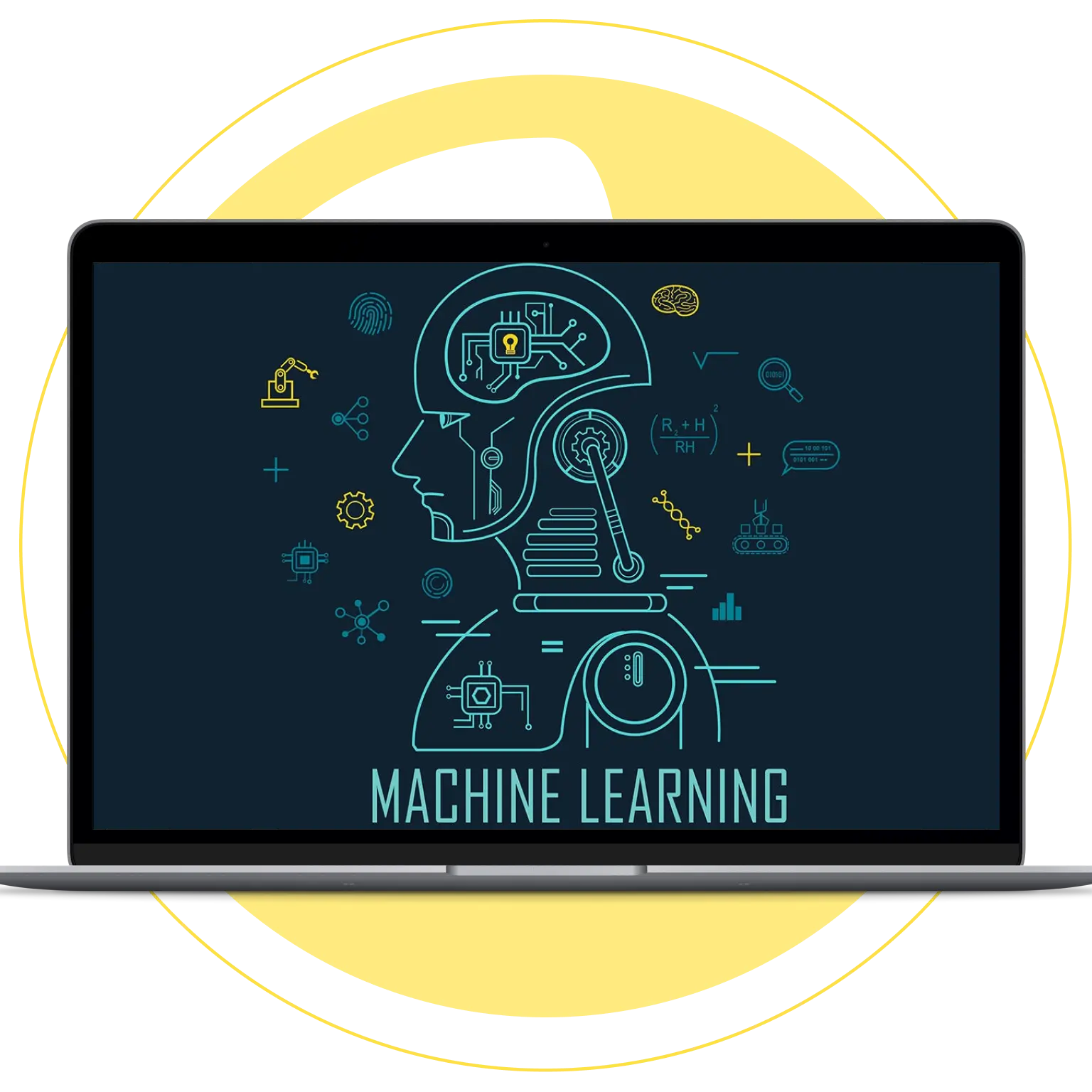
Machine Learning Capabilities
Every ML discipline your business needs — from predictive modelling to production deployment and continuous monitoring.
ML Development Cost & Timeline
Transparent estimates for common ML engagement types. Every project scoped individually — data readiness is the biggest variable.
| Engagement Type | What’s Included | Timeline | Estimated Cost |
|---|---|---|---|
| Focused ML Model | Single model + feature engineering + REST API | 4–8 weeks | $10K – $20K |
| Predictive Analytics System | Data pipeline + model + dashboard + API | 8–14 weeks | $20K – $45K |
| Recommendation Engine | Collaborative + content-based + A/B testing + API | 10–16 weeks | $25K – $55K |
| End-to-End ML Platform | Data engineering + multiple models + MLOps + monitoring | 14–24 weeks | $45K – $90K+ |
* Estimates are indicative. Timeline heavily depends on data readiness. All projects scoped individually after a free discovery call.
Our ML Development Process
From data assessment to production ML — structured, iterative, with measurable milestones throughout.
ML Engineering Disciplines That Matter
The practices that separate ML models that work reliably in production from ones that looked great in a notebook.
Apps We've Built That Made a Difference
Explore our full portfolio of mobile apps that have driven real results for our clients — from first launch to millions of downloads.
 iOS App
The Chowman App
The Chowman App opens the gateway for the world of flavorful Chinese cuisine for customers directly from the famous Kolkata-based Chinese restaurant chains.
 iOS App
Square Fit
A fantastic mobile app that helps you make beautiful photo & video edits on a single app. Square Fit includes 50+ tools to edit, add effects, and optimize images and videos.
Experience in Every Sector
14+ years of building production-grade software across the most demanding industries.
Our Machine Learning Technology Stack
The right algorithm for each problem — from classical ML to deep learning, with production MLOps infrastructure.
Classical ML
Deep Learning
Data Engineering
Experiment Tracking & MLOps
Model Monitoring
Serving & Infrastructure
Why Product Teams Choose iCoderz for Machine Learning
10+ years of ML engineering, the right algorithm for each problem (not just deep learning), and production-grade systems that stay accurate after deployment.
10+ Years of Production ML
We have been building ML systems since before the deep learning era — with roots in classical statistical modelling, feature engineering, and time series analysis. That foundation means we recommend gradient boosting when it outperforms neural networks, and know when deep learning is actually worth the complexity.
Full Pipeline, Not Just Models
Most ML projects fail not because of bad models but because of bad data pipelines, feature stores that don’t update, or lack of monitoring. We build the full production stack — data ingestion, feature engineering, model serving, and drift detection — not just the training notebook.
Business-Aligned Metrics
We define success in business terms before writing a single line of code — revenue impact, churn reduction, fraud caught, costs avoided. Every model is optimised for the metric that matters to your business, not a default that scores well in academic benchmarks but misses the point operationally.
100% Code & IP Ownership
You own 100% of the Python pipelines, trained model weights, feature engineering code, and infrastructure configuration at handover. NDA signed before any project discussion. Full documentation and reproducible training runs included so your team can retrain, extend, and maintain independently.
Machine Learning Questions Answered
Can’t find your answer? Contact us — we reply within 4 business hours.
ML development projects at iCoderz range from $10,000 for a focused predictive model to $80,000+ for end-to-end ML platforms with data pipelines, model training, production APIs, and MLOps infrastructure. A standalone ML model with available, clean data starts from $10K–$20K. We scope and estimate every project individually after a free discovery call.
Data requirements vary by problem type. Classification models can work with as few as 1,000–5,000 labelled examples for simpler tasks. Time series forecasting typically needs 1–3 years of historical data. We advise on minimum requirements for your specific use case during the discovery phase — and apply transfer learning and data augmentation to maximise model quality from limited datasets.
Machine learning is the broader discipline of systems that learn from data. Deep learning is a subset using multi-layered neural networks, particularly powerful for unstructured data like images, text, and audio. For tabular structured business data, classical ML algorithms like gradient boosting often outperform deep learning. We recommend the right approach for each problem — not the most complex one.
A focused ML model with available, clean data takes 4–8 weeks. A full ML platform with data pipeline, training, production API, and monitoring takes 12–20 weeks. The biggest variable is data readiness — projects with messy or incomplete data require additional data engineering time before model development can begin.
We implement data drift detection, model performance monitoring, and automated retraining pipelines using MLflow and Evidently AI. Models are continuously monitored for input distribution shifts and prediction degradation. Automated retraining triggers refresh models on new data without manual intervention, with alerting when performance drops below defined thresholds.
Yes. We deploy ML models as REST APIs (using FastAPI) that integrate with your existing applications via standard HTTP calls. The ML inference layer is fully decoupled from your application — your frontend or backend sends a prediction request and receives a structured response. No need to rebuild your current systems.
We use the full Python ML stack: scikit-learn for classical ML, XGBoost and LightGBM for gradient boosting on tabular data, TensorFlow and PyTorch for deep learning, Hugging Face Transformers for NLP, and Prophet for time series. We select the framework based on the problem type — classical ML often outperforms deep learning for structured business data.
Build ML Models That Work
In Production, Not Just Notebooks
Tell us your prediction problem. We’ll audit your data, propose the right architecture, and give you a transparent estimate within 5 business days.
Describe your prediction problem → response within 24 hours
Data audit + discovery call with a senior ML engineer
Architecture proposal with milestone-based pricing
No obligation. NDA available. Free data audit.